
Access to affordable health insurance is crucial for individuals to receive necessary care, especially those living with chronic conditions such as cancer. Research from the American Cancer Society shows that uninsured individuals are less likely to receive routine cancer screenings, leading to later diagnoses when treatment becomes more difficult and costly.
What Are the Enhanced ACA Tax Credits?
The Affordable Care Act (ACA) helps people purchase health insurance through the Marketplace by offering tax credits that lower the cost of monthly premiums. These credits make it possible for individuals and families to afford health coverage. The amount of the credit depends on income and is adjusted on a sliding scale — the lower the income, the greater the subsidy. These credits are vital for reducing monthly premiums and making health coverage accessible to millions.
The American Rescue Plan Act (ARPA) enhanced these credits by:
- Increasing the amount of ACA tax credits for those earning between 133% and 400% of the Federal Poverty Level (FPL) ($20,815–$62,600 for an individual in 2025).
- Extending eligibility for tax credits to those earning above 400% FPL (over $62,600 for an individual in 2025), on a sliding scale.
The Inflation Reduction Act (IRA) further extended these enhanced tax credits through the end of 2025.
Who Benefits From the Enhanced ACA Tax Credits?
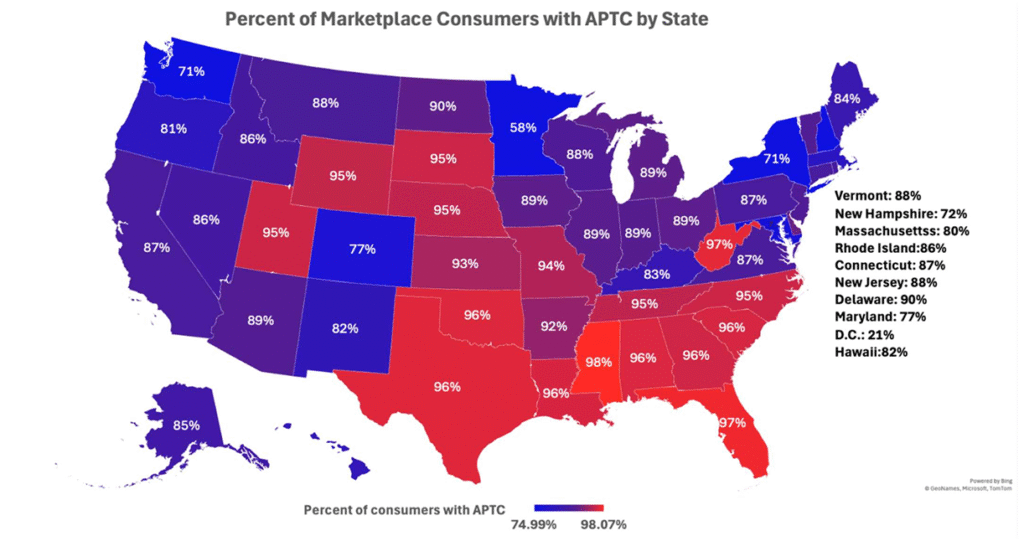
The following map illustrates the percentage of people in each state who have enrolled in a Marketplace plan and are benefiting from the enhanced ACA tax credits.